
Be a Tree
Eight lessons in living from an ordinary tree on a Mauritius beach.
Some weeks ago, in Rodrigues, I had a conversation with a colleague who loves agriculture. He spoke about planting the way other people speak about a craft they have given their life to, and what struck me was not the subject but the relationship. Plants were not scenery to him, or inputs, or an asset class. He paid attention to them. I could not honestly claim I had ever done the same.
That was still somewhere in my mind on a Sunday morning back in Mauritius, when I walked down to the beach, found the nearest tree and stood in its shade. I put my hand on the trunk, out of nothing more complicated than curiosity. It is something I did without thinking as a child, and I could not remember the last time I had done it since. Then I made the mistake of looking properly.
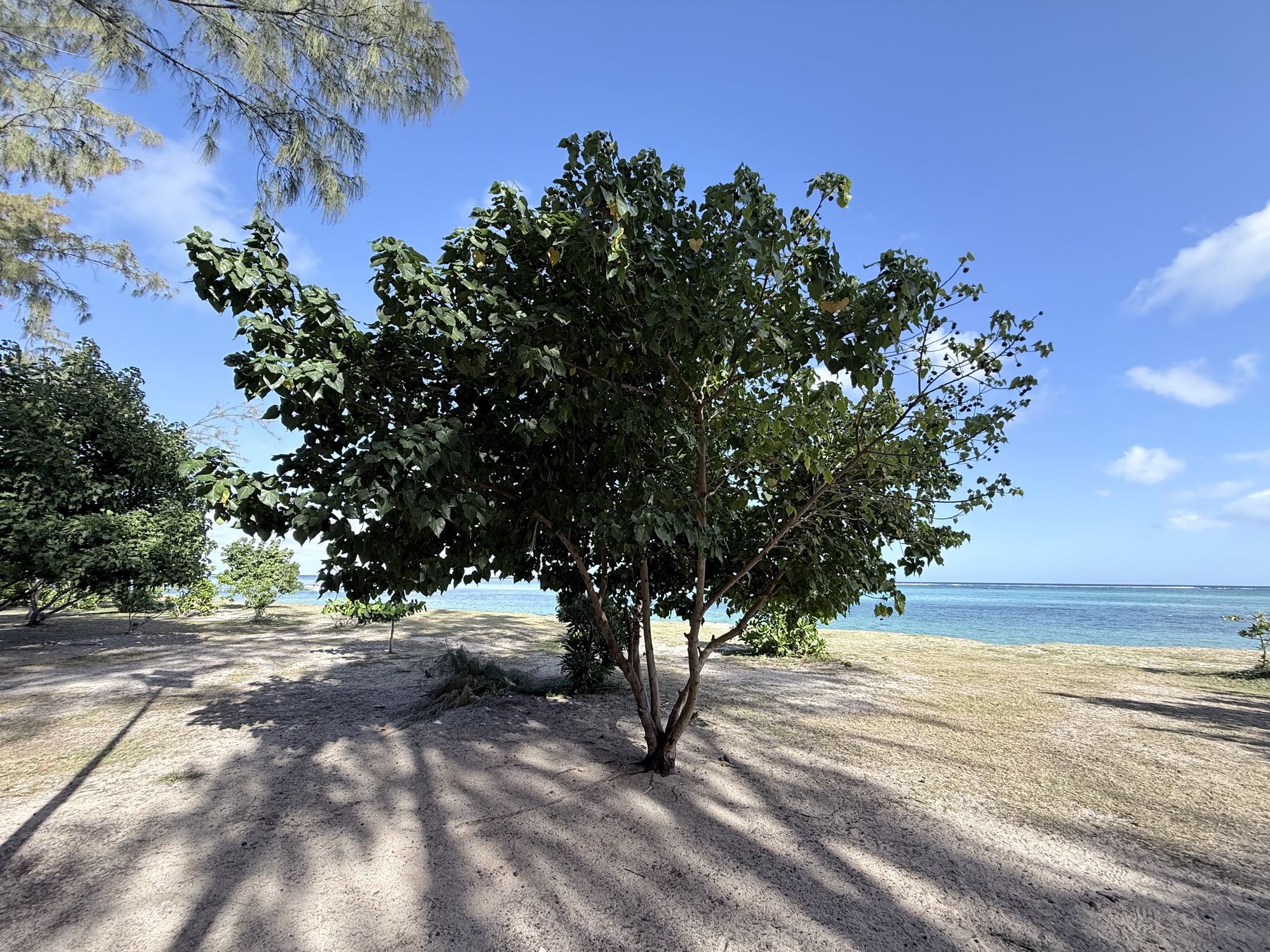
There was a nail driven into the wood, with the bark grown hard around it. There was a rope tied to a branch, left over from somebody’s good day. There were insects working across the bark, green, yellow and brown leaves on the same twig, and new shoots coming out of the places where branches had been cut. I stood there considerably longer than I had meant to, and walked away with a thought that sounded far too simple to be worth anything: be a tree.
The longer I sat with it, the less simple it became.
We are surrounded by metaphors for a good life, and most of them are borrowed from machines and markets. Optimise. Scale. Compound. Disrupt. Exit. They are useful, and they are all built around acceleration. A tree offers a different model entirely, and it is worth taking seriously, because trees are extraordinarily good at the one thing most strategies are bad at: lasting.
What follows is not an argument that we should be passive, or that nature is wise and people are foolish. It is a set of eight working principles, taken from a living form that has spent more than three hundred million years adapting to damage, scarcity, competition and change, and growing anyway.
1. Be rooted, then bend
A tree can reach high because it first goes deep. The architecture that matters most is the part nobody photographs.
The same is true of people, and we get the proportions badly wrong. We give enormous attention to the visible: the title, the achievement, the recognition, the audience. Those are branches. Branches are real, and sometimes impressive, but branches without roots are simply large things waiting for weather.
Roots are our values, our history, our faith, our principles, our sense of who we are when the applause is not there. You discover whether you have them at the point where holding a position becomes expensive. What do you actually believe when it goes wrong? What will you not trade for convenience? Those questions are answered by roots, or they are not answered at all.
But here is the part we usually miss. Being rooted is not the same as being rigid. A tree is anchored and its branches move constantly, dramatically so in a storm. Rigidity is what snaps. The trees that come through a cyclone are the ones that bend and hold.
People confuse conviction with inflexibility, and it may be the reverse. When you are genuinely clear about what you stand for, you can afford to change your mind about a great many other things. You can listen, experiment, be persuaded, be wrong in public. You do not need every opinion to become part of your identity, because your identity is not held up by your opinions.
Principles firm, methods loose. Purpose constant, route negotiable.
2. Grow around the nail
This is the image that has stayed with me most.
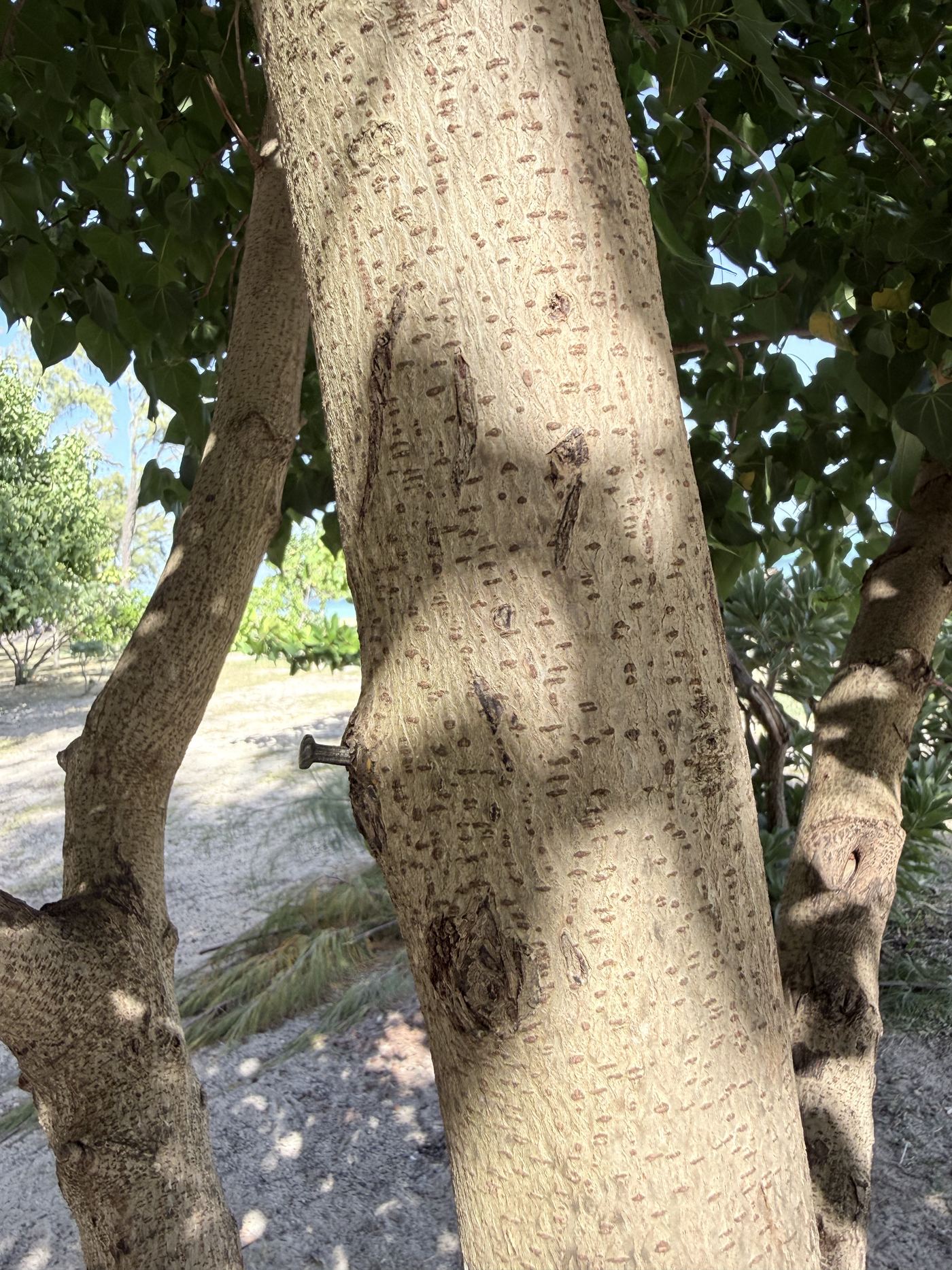
Life drives nails into us. A betrayal, a public failure, an injustice, a loss, something said that cannot be unsaid, something done that cannot be undone. Our instinct is to define healing as erasure: we want to go back to who we were before it happened.
Very often there is no going back. The nail stays. The scar stays. What remains open is a different question: whether the wound becomes the organising fact of our life, or one feature of a much larger one.
The tree suggests another definition of healing altogether.
The scar does not vanish. But eventually there is far more tree than scar.
This is not an argument for pretending harm was acceptable, or excusing the people who caused it, or declining justice, or tolerating what should not be tolerated. It is narrower than that, and harder. It means refusing to grant the wound permanent authority over the direction of your growth. Acknowledge the nail. Understand it. Learn from it. Protect yourself from the next one where you can. Then carry on growing, and let time do the arithmetic.
3. Have bark
There is an obvious way to take this metaphor too far, and it is worth blocking now.
Look at a tree’s generosity and you might conclude that the lesson is to accept whatever is done to you. It is not. Trees have bark. Some have thorns. Some produce chemicals to repel what is eating them. Some seal their wounds and redirect resources away from damaged parts. Nature is full of boundaries. It is not sentimental about them.
Generosity without boundaries becomes depletion. Patience without boundaries becomes submission. Forgiveness without judgement becomes a standing invitation.
So the principle is not accept everything. It is subtler.
Bark does not exist because the tree resents the world. It exists because a living thing needs protection in order to keep giving. The tree that loses its bark does not become more generous. It dies, and then it gives nothing to anyone.
We need the same equipment: the ability to say no, to withdraw, to protect our time and attention, to defend a principle, and to recognise when a relationship, a role or an environment is quietly taking more than it returns. Kindness and boundaries are not opposites. Boundaries are frequently the only thing that makes sustained kindness possible.
4. Give shade without keeping score
The tree I stood under has probably sheltered thousands of people. It knows none of their names. Nobody thanked it. Nobody owes it anything. It goes on giving shade at exactly the same rate.
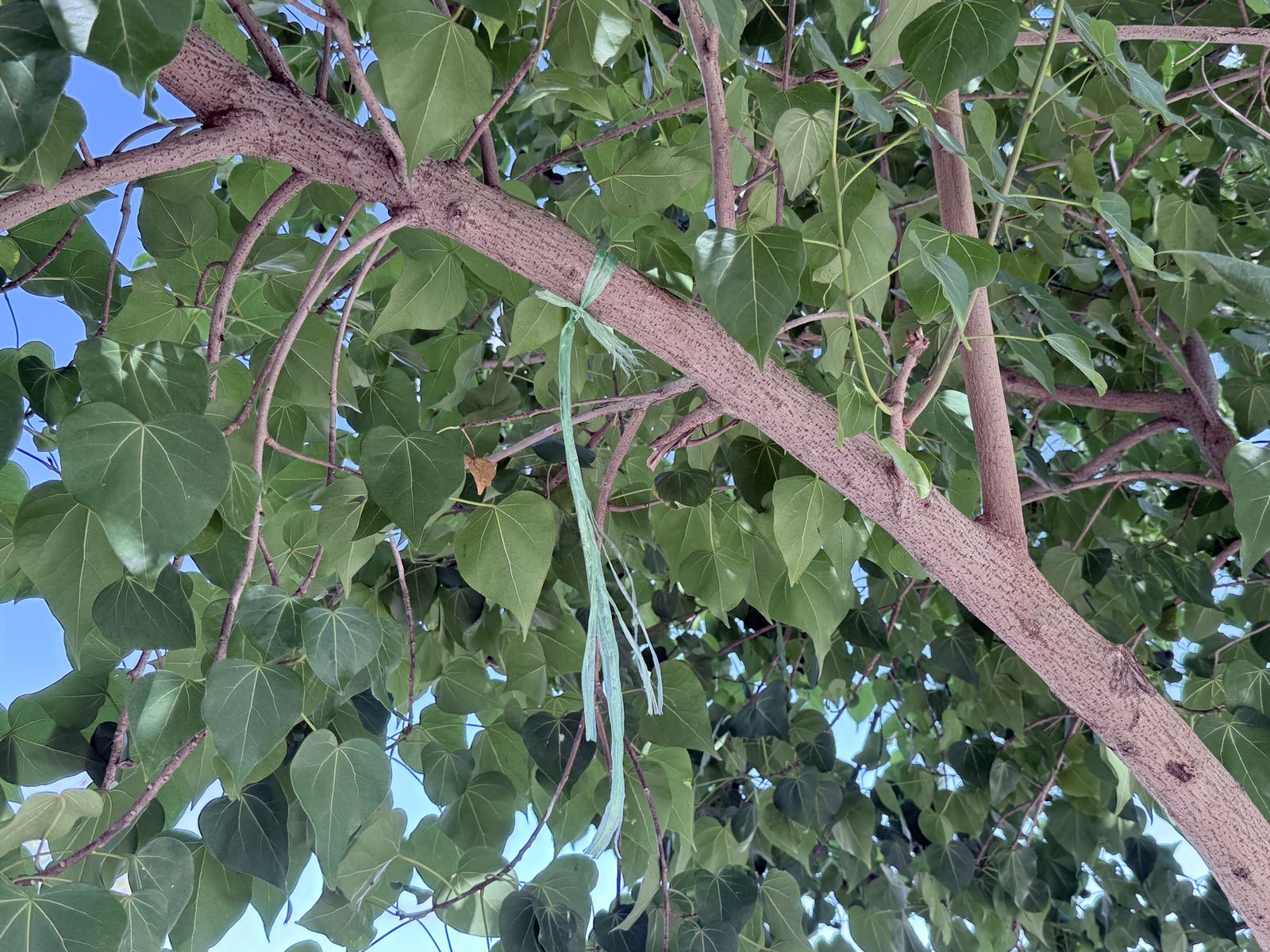
Human beings cannot give quite so indiscriminately, and probably should not try. But there is something here about the invisible accounting that causes so much of our disappointment. I did this for you. I supported you. I remembered you. We run ledgers in our heads, and then we are wounded when the other party does not appear to be reading from the same book.
Some of that is entirely legitimate. Relationships need reciprocity; organisations need accountability. But there is a category of giving that becomes much better the moment it is released from calculation. A word of encouragement. Helping without needing the credit. Mentoring someone junior. Introducing two people who ought to know each other. Sharing what you know. Creating an opportunity you will not be present to enjoy.
Some things can simply be shade.
This is how goodwill actually behaves, which is why I keep returning to it. You put something good into the ecosystem without knowing where the return will come from. Often it comes back indirectly, years later, through somebody else entirely. Sometimes it never comes back to you at all.
That does not make the shade wasted.
5. Create ecosystems, not dependencies
Look closely at the bark and the tree stops being an organism and becomes an address.
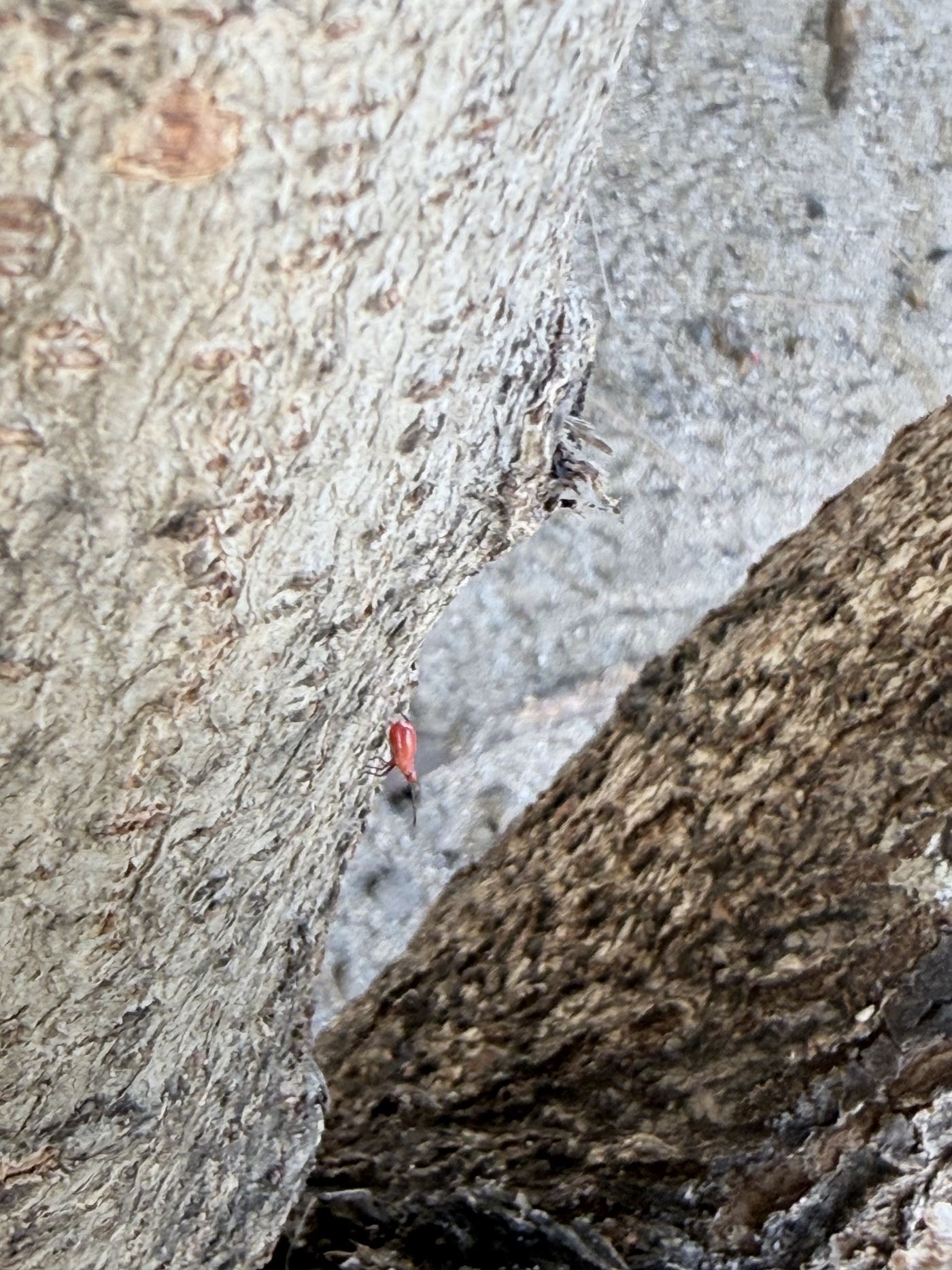
Insects, birds, nests, seedlings growing in the conditions the shade creates. What is notable is how little of this the tree controls. It does not manage the birds. It contributes conditions, and then a great deal of life happens that has nothing to do with it.
This distinction matters more than it first appears, because people who look generous can unintentionally create dependency instead of growth. Leaders do it. Parents do it. Founders and institutions do it. Everything passes through us, every decision needs us, every problem waits for our intervention. It feels like importance. It is often just a bottleneck with good intentions.
The better measure is whether other people get stronger in our presence.
Create the conditions. Provide shelter when it is genuinely needed. Offer stability, resources, cover from the worst of the weather. Then let people grow into their own shapes, including the ones you would not have chosen for them.
6. Accept your seasons, and let the leaf fall
On the same branch, in the same wind: bright green leaves, yellowing leaves, dry brown ones.
Nothing in the tree distinguishes the brown leaves as failures or the green ones as victories. They are different stages of the same cycle.
Stages are not verdicts.
We want life to stay permanently green: growth, momentum, expansion, progress. But there are seasons of intense growth, seasons of fruit, seasons of loss, and long dull seasons in which very little visibly happens. Winter is not evidence that the tree has failed. It is part of the life of the tree.
We tend to read our own contractions as failure. A project ends. Children grow up and need us differently. A career turns. A friendship thins. An identity that mattered enormously becomes less relevant. Rest can be productive. Stillness is often preparation. Loss makes space that nothing else would have made.
And when a leaf is finished, the tree releases it. It does not chase the leaf or try to reattach it. This is the part we find hardest. We hold on to old identities, old grudges, old ambitions, old ways of working, old versions of ourselves, often not because they still serve us but because they once did, which is a very different thing.
Something can have been deeply valuable and still have reached its end. A leaf mattered: it caught the light, it fed the tree, it did its whole job. Then its work was complete. Thank it, learn from it, and let it fall.
Not everything that ends has failed. Sometimes completion is the success.
7. Regenerate rather than restore
Where a branch had been cut, the tree had not tried to rebuild the same branch. New shoots were coming out at new angles, in directions the original growth would never have taken.
After something difficult, our instinct is restoration. I want my old life back. I want to be who I was. Sometimes that is available. Often it is not: the branch is gone and the old shape cannot be recreated.
What remains available is regeneration, which asks a different and much more useful question.
A career setback opens a direction you would not have chosen. A failed project produces knowledge that becomes the foundation of the next one. An ending changes your understanding of yourself. A mistake produces humility that no success would have supplied.
None of this makes the painful event desirable, and I distrust any philosophy that says otherwise. Some things are simply losses. But life is capable of generating genuinely new forms, and growth sometimes means becoming someone you could not have become without the disruption.
8. Grow quietly, and plant for people you will never meet
Trees may be the clearest example of compounding, and we never once see them growing. We see the result: the trunk, the canopy, roots that hold through a cyclone. The growth itself happened in increments too small to notice, repeated for decades.
Most things worth having in a life work the same way. Knowledge, trust, health, reputation, skill, character, the culture of an organisation. They rarely arrive through one spectacular event. They accumulate. Our culture is fascinated by visible transformation: the breakthrough, the launch, the overnight success. Consistency does not photograph well. It simply works.
And then there is the horizon. Some trees outlive the people who planted them by centuries, which means somebody planted them knowing they would never sit in the shade.
Almost everything that matters most requires this: institutions, education, infrastructure, environmental repair, culture, trust, a decent society. Modern working life pushes hard in the other direction. This quarter, this year, before I move on, before somebody else gets the credit.
To build something worthwhile while accepting that the eventual beneficiary may never know your name is, I think, one of the highest forms of goodwill available to us. It is also the form most likely to survive us.
The paradox of the tree
What makes the tree such a durable model is the number of contradictions it holds at once, without apparent strain.
It is rooted, yet flexible. Strong, yet yielding. Independent in appearance, yet entirely dependent on soil, water, fungi, pollinators and weather. Generous, yet protected by bark. Scarred, yet beautiful. Still, yet always growing. Able to let go, yet deeply anchored.
Maturity, I suspect, is not choosing one side of these tensions. It is learning to hold both: conviction and curiosity, ambition and patience, generosity and boundaries, memory and forgiveness, individual purpose and responsibility to the wider system that made you possible.
Be a tree
I went to the beach looking for shade and left thinking about how to live.
That tree has stood there for decades. Thousands of people have passed it. Some rested under it. Someone tied a rope to it. Someone drove a nail into it. Storms hit it, branches went, leaves grew and died and fell. Insects and birds lived entire lives on it. Through all of it, the tree did what trees do. It stayed rooted. It bent. It protected itself. It gave. It released. It regenerated. It grew towards the light.
We do not need a life free of storms. We do not need every wound to disappear, or every leaf to stay, or everyone who benefits from our shade to remember our name.
Root deeply.
Reach upward.
Give generously.
Have bark.
Make shade.
Accept the seasons.
Let the leaf fall.
Grow around the nail.
Regenerate.
Plant for the people who come after you.
Keep growing towards the light.
And do not wait for life to become perfect before you start living beautifully.
Published in The Goodwill Ledger at www.goodwill-led.com/essays/be-a-tree/
Respond to this essay
I welcome thoughtful reflections, critiques and examples. Selected responses may inform future essays.
Send a private response